What Is SEO?
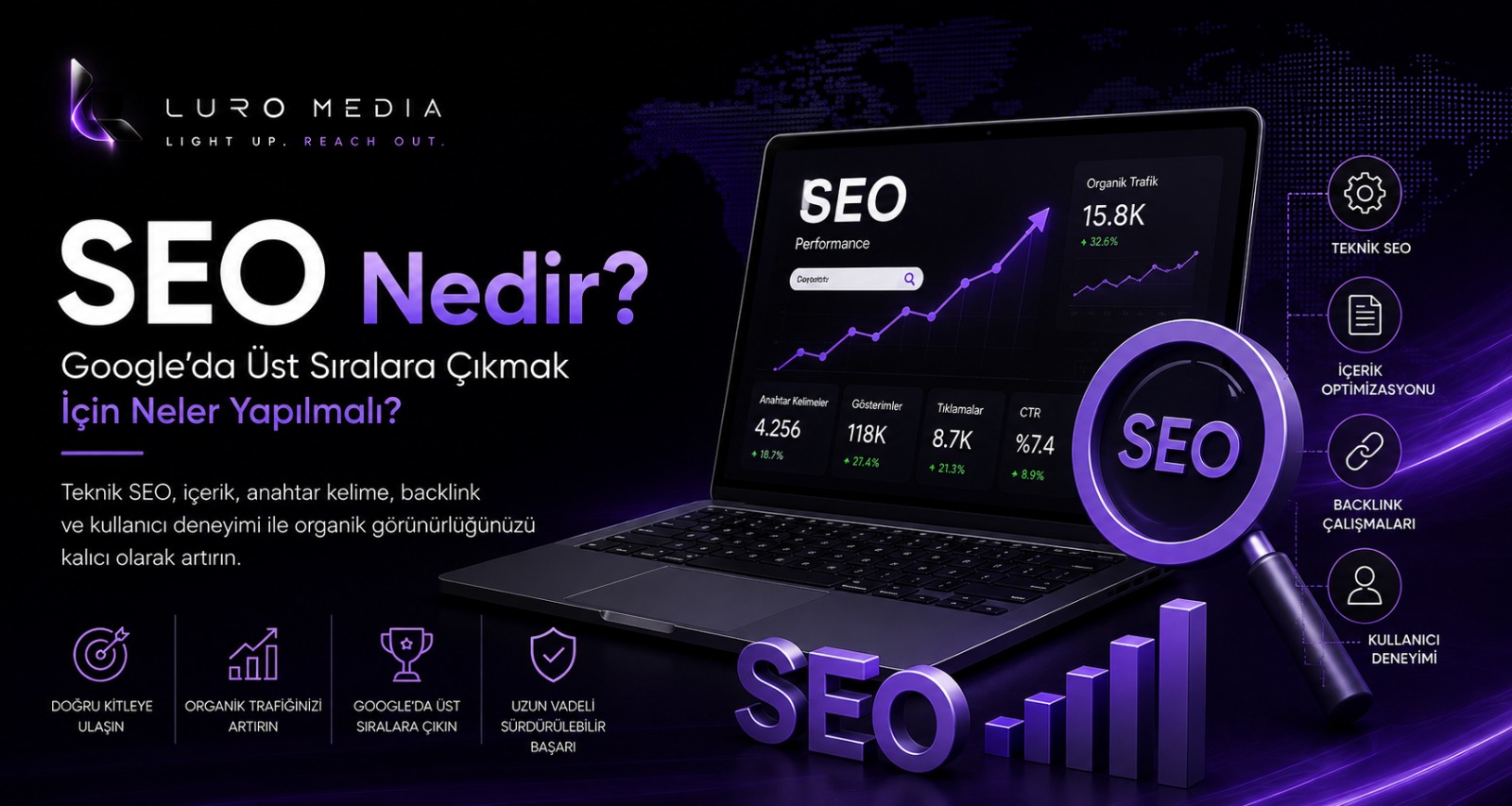
SEO, or Search Engine Optimization, is the process of improving a website's visibility in organic search results on Google and other search engines.
The objective of SEO is not simply to achieve higher rankings. A successful SEO strategy aims to connect a business with users who are actively searching for information, products, services, or solutions related to that business.
For a digital agency, searches such as “web design agency,” “SEO services,” “Google Ads management,” or “social media management” may represent valuable opportunities to reach potential customers.
Why Is SEO Important?
Search engines play an important role in how people discover information, businesses, products, and services online. If a business has limited search visibility, potential customers may discover competitors instead.
SEO can help businesses become visible not only when users search for the brand name but also when they search for relevant products, services, and solutions.
Potential benefits of SEO include:
- Increasing organic website traffic
- Improving Google visibility
- Reaching potential customers
- Strengthening brand awareness
- Improving website technical quality
- Enhancing user experience
- Building long-term digital visibility
- Reducing dependence on paid traffic over time
How Does Google Rank Websites?
Google uses numerous systems and signals when generating search results. SEO is therefore much more complex than simply repeating a keyword several times on a page.
Search engines may evaluate relevance, content quality, technical accessibility, page experience, website structure, and various trust signals when determining which pages should appear for a search.
Because search algorithms continue to evolve, SEO strategies should focus on sustainable practices and creating genuine value for users.
What Are the Main Areas of SEO?
SEO generally consists of several connected disciplines including technical SEO, on-page SEO, content optimization, and off-page SEO.
1. Technical SEO
Technical SEO focuses on helping search engines crawl, understand, and index a website correctly.
Technical SEO may include:
- Website speed
- Mobile compatibility
- HTTPS
- URL structure
- Canonical tags
- XML sitemaps
- Robots.txt
- Broken links and 404 pages
- Redirects
- Structured data
- Crawling and indexing issues
- Core Web Vitals
What Is On-Page SEO?
On-page SEO focuses on optimizing individual website pages so they are easier for users and search engines to understand.
Each page should ideally address a clear topic and satisfy a specific user need or search intent.
Important on-page SEO elements include:
- Page titles
- Meta titles
- Meta descriptions
- Heading structure
- Page content
- Keyword usage
- Image alt text
- Internal links
- URL structure
- User experience
What Is Keyword Research?
Keyword research is the process of understanding the words and queries a target audience uses when searching online.
Search volume alone should not determine which keywords a business targets. Search intent and commercial relevance are equally important.
For example, “what is SEO?” is primarily informational, while searches such as “SEO agency” or “SEO services” may indicate stronger commercial intent.
What Is Search Intent?
Search intent describes the reason behind a user's search query.
A person may be searching for information, trying to reach a particular website, comparing products or services, or preparing to make a purchase.
Search intent can generally be grouped into:
- Informational searches
- Navigational searches
- Commercial investigation
- Transactional searches
Creating content that matches the user's actual intent is an important part of modern SEO.
How Should SEO Content Be Created?
SEO content should primarily provide useful and understandable information for users. Simply inserting keywords into a page does not automatically create high-quality SEO content.
The topic should be covered appropriately, headings should have a logical structure, and relevant internal links should help users discover related information.
High-quality SEO content should:
- Answer the user's question clearly
- Cover the topic appropriately
- Use logical heading structures
- Avoid unnecessary keyword repetition
- Be easy to read
- Include useful internal links
- Be updated when necessary
What Is a Backlink?
A backlink is a link from another website to your website. Backlinks can be an important component of off-page SEO.
However, backlink quality and relevance are generally more important than simply collecting large numbers of links.
Low-quality or manipulative link-building strategies may create risks instead of producing sustainable SEO value.
Why Is Internal Linking Important?
Internal linking connects relevant pages within the same website.
For example, an article about digital marketing can link to related pages about SEO, Google Ads, web design, or social media management.
Internal links can help users discover related information and help search engines understand the structure and relationships between pages.
Does Website Speed Affect SEO?
Website performance is important for both user experience and search visibility. Slow-loading pages can create poor experiences, particularly for mobile users.
Image optimization, efficient code, caching, and appropriate server performance can all contribute to faster page loading.
Why Is Mobile Experience Important?
A significant portion of internet traffic comes from mobile devices. Websites therefore need to work effectively across different screen sizes.
Text should remain readable, navigation should be usable, buttons should be easy to interact with, and pages should load efficiently.
SEO vs. Google Ads
SEO and Google Ads are two different methods businesses can use to gain visibility through Google.
Google Ads uses paid advertising to provide faster visibility, while SEO focuses on developing organic visibility over the longer term.
Rather than treating them as competing channels, businesses can use SEO and Google Ads together as part of a broader search marketing strategy.
How Long Does SEO Take?
There is no universal timeframe for SEO results. Competition, website history, technical condition, content quality, industry, and competitors can all influence how quickly progress occurs.
SEO should generally be viewed as a long-term digital investment rather than a one-time task.
Common SEO Mistakes
- Keyword stuffing
- Publishing duplicate or low-quality content
- Ignoring technical SEO problems
- Neglecting mobile experience
- Ignoring website performance
- Incorrect canonical implementation
- Leaving broken links unresolved
- Ignoring internal linking
- Focusing only on backlink quantity
- Ignoring search intent
- Failing to measure SEO performance
How Is SEO Performance Measured?
SEO success should not be evaluated using a single keyword ranking alone.
Useful SEO metrics can include:
- Organic traffic
- Search impressions
- Organic clicks
- Click-through rate
- Keyword visibility
- Indexed pages
- Conversion rate
- Organic leads
- Technical SEO issues
Professional SEO Management with Luro Media
SEO involves much more than changing page titles or publishing occasional blog articles. Technical infrastructure, content strategy, keyword research, on-page optimization, and performance analysis should work together.
At Luro Media, we aim to develop SEO strategies according to each brand's industry, audience, competitors, and existing website infrastructure.
From technical SEO analysis and content planning to page optimization and organic performance monitoring, we approach SEO as an integrated process.
Our objective is not simply to generate more visitors but to build sustainable organic visibility that connects businesses with users genuinely interested in their products and services.
Conclusion
SEO is a comprehensive digital marketing process that can help businesses develop long-term visibility across Google and other search engines.
A strong SEO strategy combines technical quality, useful content, appropriate keywords, user experience, internal linking, and trustworthy off-page signals.
If you want to improve your Google visibility and develop a sustainable organic growth strategy for your business, you can contact Luro Media.