What Is Digital Marketing?
Digital marketing refers to the strategies and activities businesses use to promote their products and services online, reach their target audiences, generate potential customers, and support business growth.
Today, consumers often search on Google, explore social media profiles, read reviews, and visit company websites before making a purchasing decision. As a result, building a strong digital presence has become an important part of staying competitive.
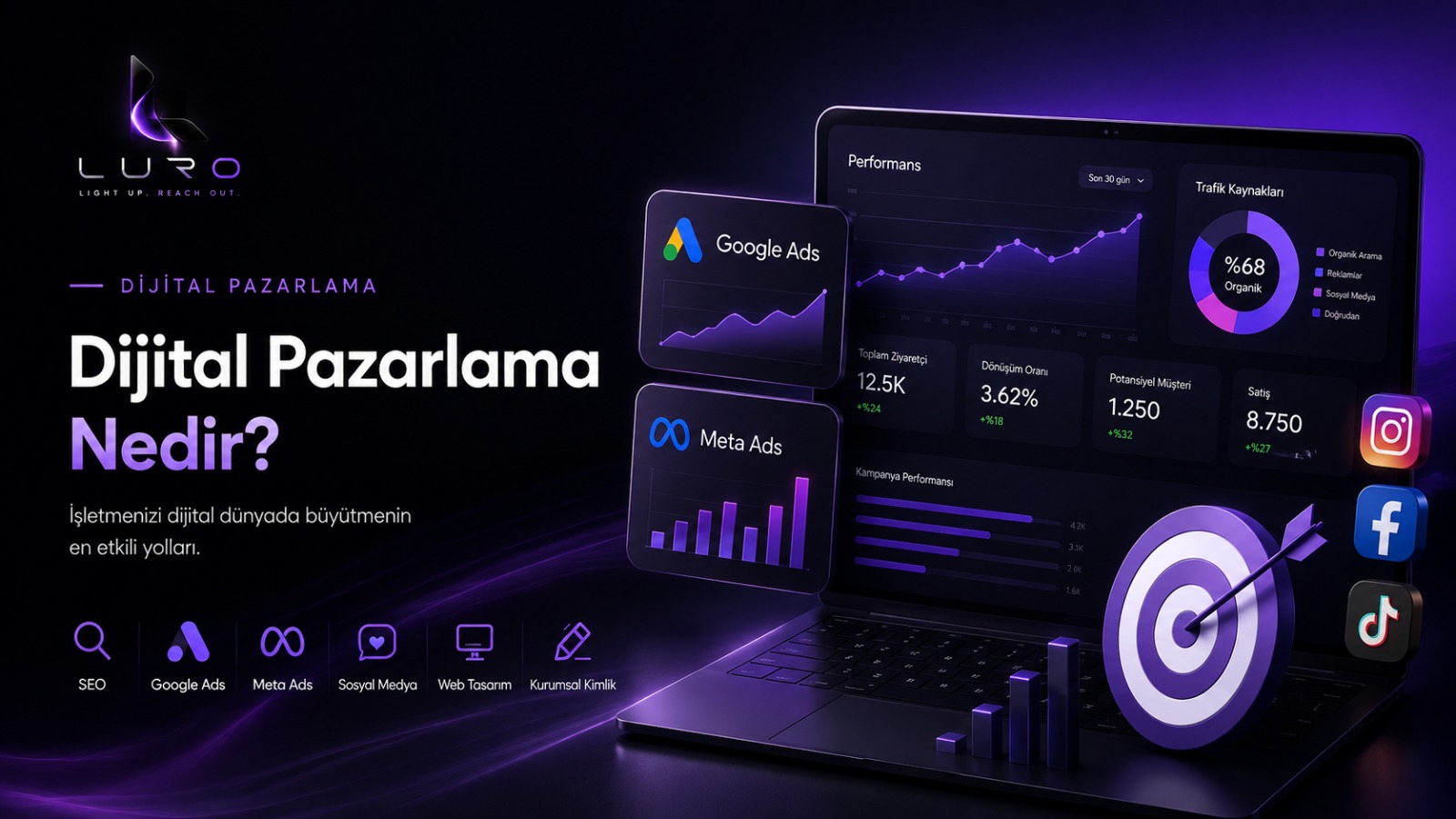
An effective digital marketing strategy goes far beyond running advertisements. SEO, Google Ads, Meta Ads, social media management, professional web design, content creation, and a strong brand identity should work together as part of an integrated strategy.
Why Is Digital Marketing Important?
Traditional marketing methods can make it difficult to precisely reach the right audience and measure results. Digital marketing provides businesses with more measurable and targeted opportunities.
With the right strategy, businesses can reach relevant audiences at the right time, strengthen brand awareness, generate leads, and turn digital channels into sustainable customer acquisition systems.
Key benefits of digital marketing include:
- Reaching more relevant target audiences
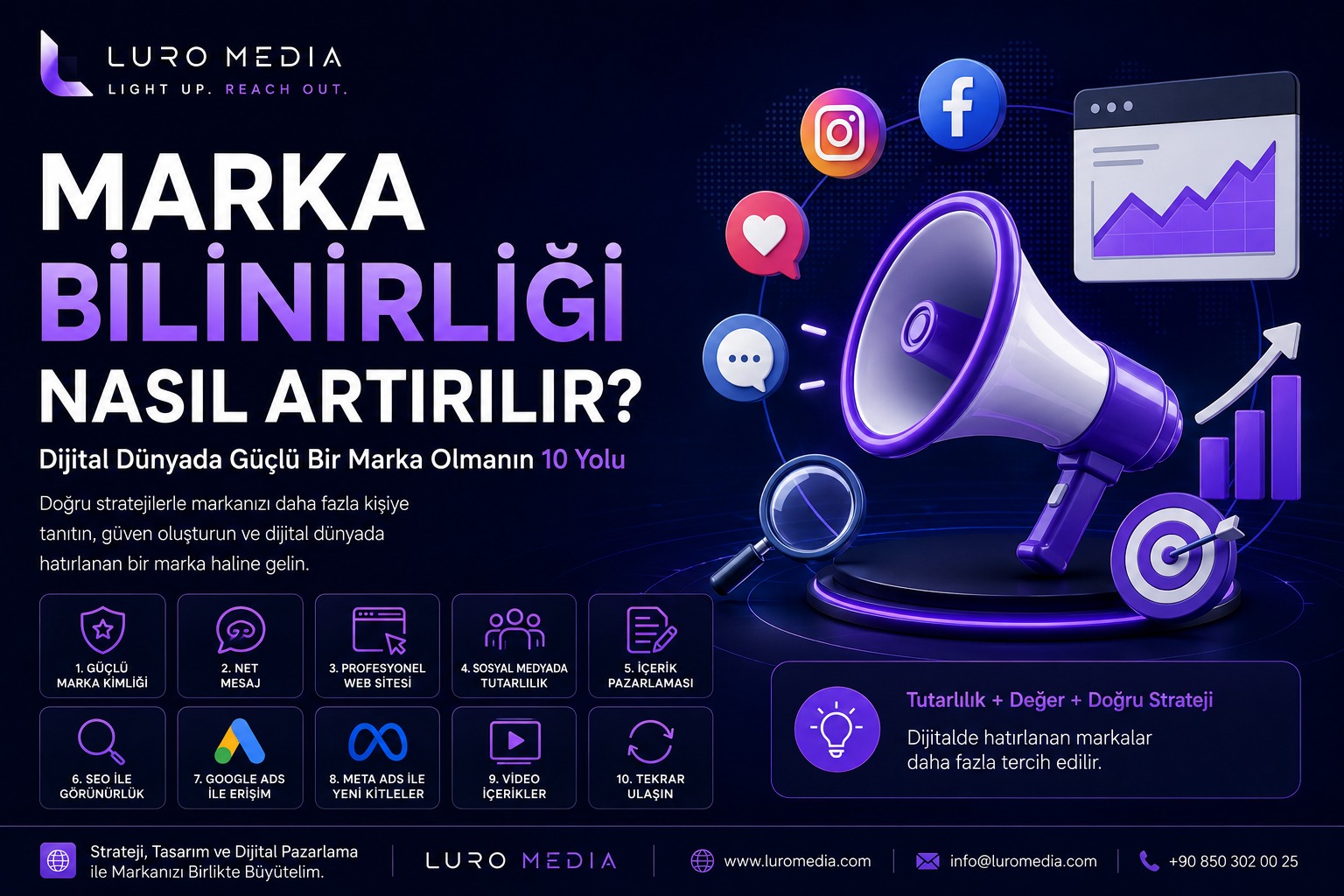
- Increasing brand awareness
- Generating potential customers
- Measuring advertising performance
- Supporting sales and conversions
- Improving online visibility
- Building long-term customer relationships
What Are the Main Digital Marketing Channels?
Digital marketing consists of multiple channels that can work together. The right combination depends on a company's industry, target audience, budget, and business objectives.
1. Search Engine Optimization (SEO)
SEO is the process of improving a website's visibility in Google and other search engines for relevant searches.
The goal is not simply to increase website traffic, but to attract users who are genuinely interested in the products or services a business provides.
Technical SEO, website speed, mobile compatibility, content quality, keyword strategy, website architecture, and links are important elements of an effective SEO strategy.
2. Google Ads
Google Ads allows businesses to reach potential customers who are actively searching for relevant products or services on Google.
A properly structured campaign can position a business in front of users at the moment they are searching for a solution.
Keyword selection, negative keywords, ad copy, targeting, conversion tracking, and landing page optimization should all be managed together to improve campaign performance.
3. Meta Ads
Meta Ads enables businesses to advertise across Meta platforms such as Facebook and Instagram.
Businesses can use Meta advertising to introduce products, increase website traffic, generate leads, support sales campaigns, and reconnect with users who have previously interacted with their brand.
Creative quality, ad copy, audience targeting, campaign structure, and conversion measurement all play an important role in campaign performance.
4. Social Media Management
Social media is one of the most important channels for brands to communicate directly with their audiences.
Professional social media management involves much more than publishing posts. Content strategy, visual identity, content planning, brand voice, community management, and performance analysis should work together.
5. Web Design and User Experience
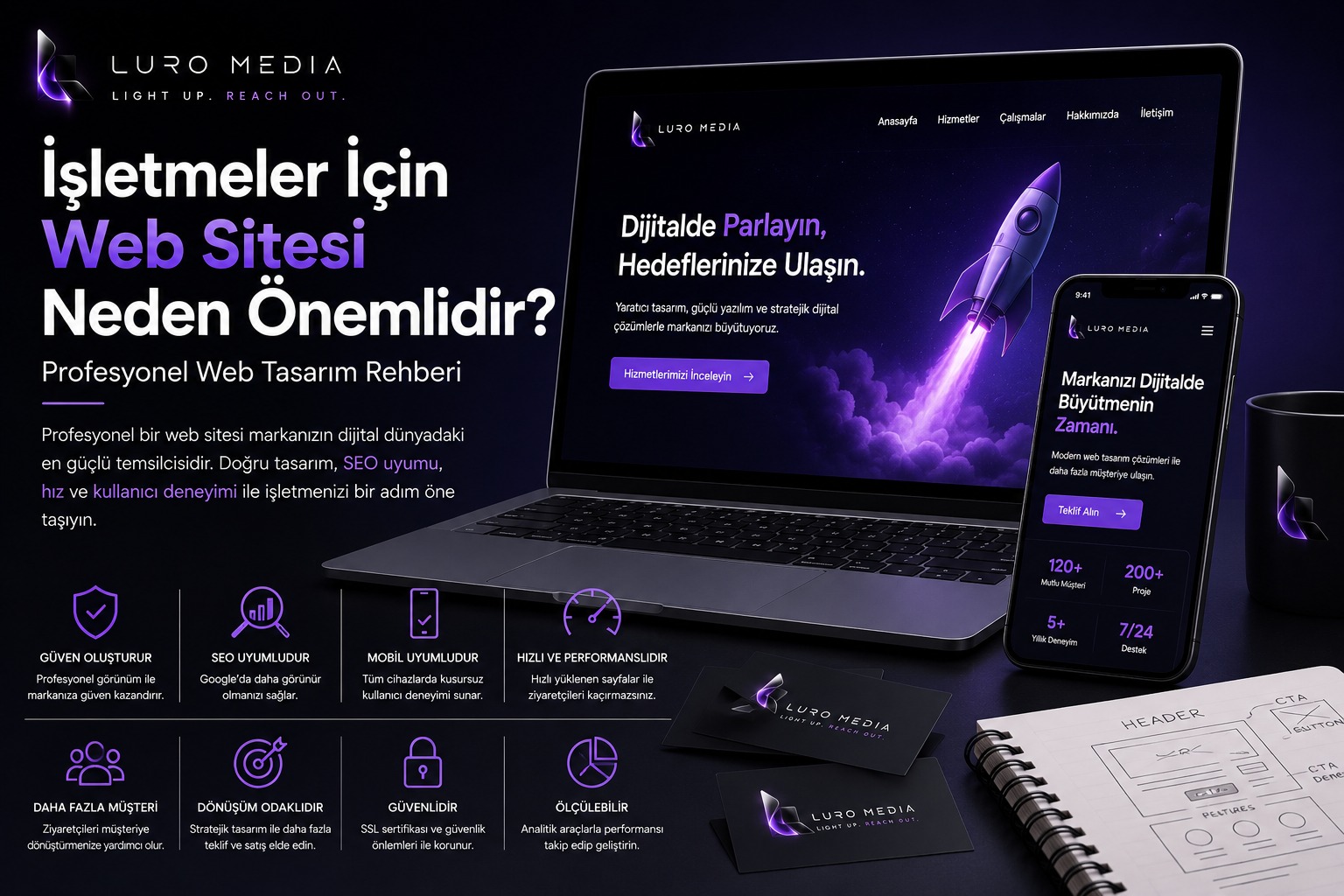
A company's website is often at the center of its digital marketing ecosystem. Users arriving from advertisements, search engines, or social media frequently visit the website to learn more about the business.
A successful website should therefore do more than look attractive. It should be fast, mobile-friendly, easy to navigate, trustworthy, and designed to encourage visitors to take meaningful actions.
6. Corporate Identity and Brand Image
Logos, color palettes, typography, visual language, and communication style influence how audiences perceive a brand.
A consistent corporate identity helps businesses create a professional experience across websites, social media, advertisements, and other digital communication channels.
How to Build an Effective Digital Marketing Strategy
There is no single digital marketing strategy that works for every business. An e-commerce company and a service-based business may have completely different audiences, customer journeys, and objectives.
A strong strategy typically includes:
- Analyzing the current digital presence
- Defining the target audience
- Researching competitors
- Selecting the right digital channels
- Setting measurable goals
- Developing content and advertising strategies
- Implementing conversion tracking
- Analyzing performance regularly
- Optimizing campaigns based on data
SEO, Google Ads, or Social Media?
A common mistake is treating digital marketing channels as alternatives to one another. In many cases, they are most effective when they work together.
SEO can build long-term organic visibility, while Google Ads can help reach users with stronger purchasing intent more quickly. Social media strengthens brand communication, while Meta Ads can help businesses reach new audiences and generate conversions.
The right combination should be determined according to the company's objectives, industry, budget, and current digital presence.
Why Measurement Matters in Digital Marketing
One of the greatest advantages of digital marketing is measurability. However, views and clicks alone do not provide the complete picture.
Website visits, form submissions, calls, messages, sales, conversion rates, and advertising costs can provide more meaningful insights into actual business performance.
Analyzing these metrics helps businesses understand which campaigns are delivering results and where marketing budgets can be used more efficiently.
Build a Stronger Digital Brand with Luro Media
At Luro Media, we approach digital marketing as an integrated growth system rather than a collection of disconnected services.
Through social media management, Google Ads, SEO, Meta Ads, web design, corporate identity, and web & software solutions, we aim to build a stronger and more consistent digital presence according to each brand's needs.
Every brand has different goals and audiences. For this reason, analysis, strategy, implementation, measurement, and optimization should be planned around the specific needs of each business.
Conclusion
Digital marketing is much more than online advertising. With the right strategy, SEO, paid advertising, social media, web design, and branding can work together to create a powerful digital growth ecosystem.
If you want to strengthen your digital presence, reach your target audience more effectively, and build a sustainable digital strategy for your business, you can contact Luro Media.